AN ULSTER SPORTS LEGACY EXHIBITION
OBJECTS
OF RESILIENCE
OBJECTS OF RESILIENCE
Every object tells a story
Sport is often defined by moments of achievement. But behind those moments are periods of challenge, uncertainty, disappointment and change.Objects of Resilience brings together sportspeople and the objects that became important to them during those moments. Some are ordinary. Some are deeply personal. Each carries a story of perseverance, recovery or belief — and offers a glimpse of what resilience can mean when it is needed most.
01
WILLIE JOHN MCBRIDE
RUGBY UNION
THE OBJECT
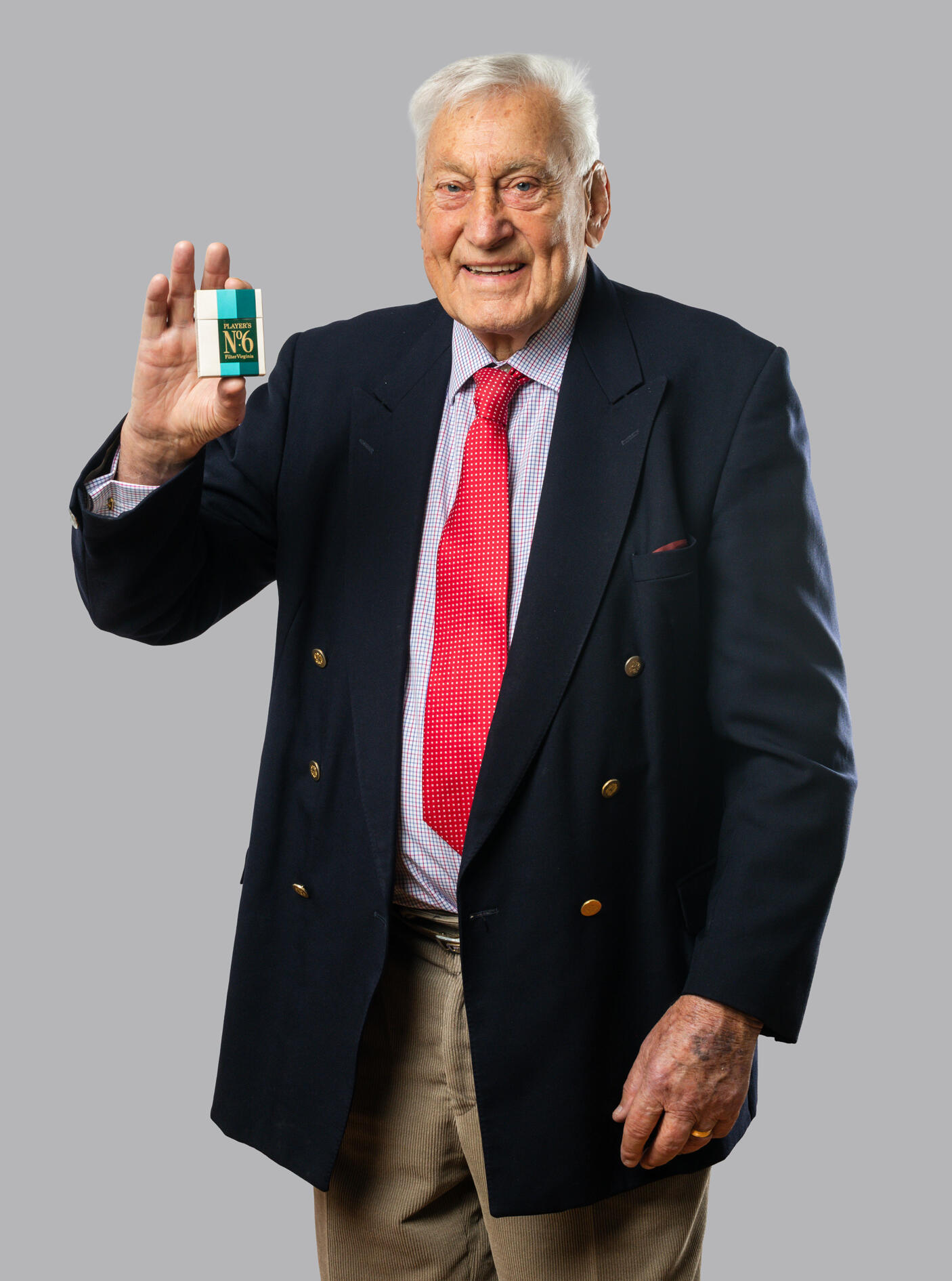
A Packet of Player's Cigarettes
By ‘71 I had already toured with the British Lions in ‘62, ’66 and ’68. With tours to South Africa, Australia and New Zealand in those days taking up to three months, it was increasingly testing for us amateurs as we had to seek time off from our employers. I hence thought I might forgo the upcoming Lions tour to New Zealand rather than request further leave from my boss. However, the Welsh coach, Carwyn James, came to Northern Ireland to speak to me about his provisional choice of forwards for the tour. When I dropped the bombshell that I didn't intend to make myself available, I vividly remember James slowly taking out a Player’s cigarette, lighting it and looking me square in the eye, demanding “I need you”.That changed my mind and I went on to play an integral part in the only tour to result in a Lions victory over the New Zealand All Blacks (I eventually went on to captain the "invincible" Lions in my fifth and final tour in South Africa). Once commonplace, it’s now a rare thing to see someone light up in public but I still remember James’s cigarette and the moment such an unhealthy and harmful object led to my eventual immortality in rugby history.
"I need you."
- Carwyn James, 1971
02
BETH COULTER
GOLF
THE OBJECT
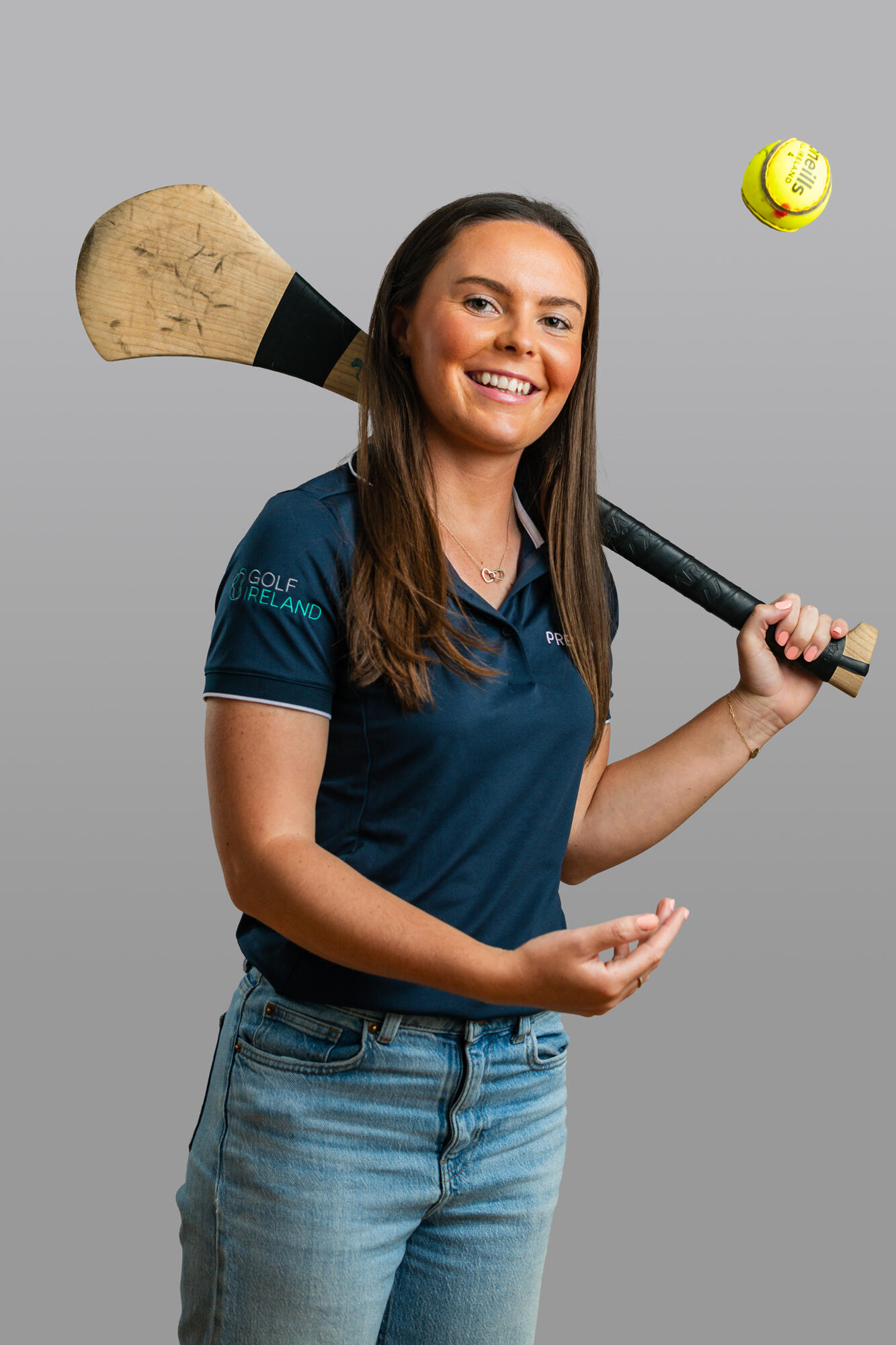
A Camogie Stick & Slioter
Camogie was my first love in sport and helped shape the athlete and person I am today.I have lived all my life in the small village of Ballygalget in County Down. Growing up there, camogie was about much more than simply playing a sport. You played alongside the girls who lived near you, went to primary school with you and became some of your closest friends. It gave me a real sense of belonging and taught me the value of being part of a team.I played for Ballygalget and later represented Our Lady and St Patrick’s College, Knock. Along the way, I won Down underage championships and leagues, Ulster and All-Ireland titles with my school, two Féile All-Ireland medals and two Ulster Colleges All-Star awards.As a child, I was always sporty and competitive. My dream was to win an All-Ireland camogie title at Croke Park. However, as golf began to take over, I realised it could offer me the opportunity to earn a scholarship in America and, eventually, achieve my ambition of becoming a professional golfer.Although I chose golf, camogie played a massive part in helping me become the golfer I am today. The hand-eye coordination, speed, power and athleticism I developed from playing camogie transferred naturally into my golf swing and helped me understand the fundamentals of striking a ball. I continued playing camogie for as long as I could because I loved the energy of the game and, most of all, the feeling of being part of a team.Golf is usually seen as an individual sport, but I have always tried to carry that team mentality with me. It has been especially important when representing Ireland, Great Britain and Ireland, Europe and the Sun Devil women’s golf team at Arizona State University.Many of my best friends still play for Ballygalget, and whenever I am home, I try to get along and watch them. Camogie will always be my first sporting love, and I still hope that one day I can return to the field and help Ballygalget win a Down Senior Championship.My stick and sliotar remind me where I came from. They represent friendship, community, teamwork and the determination to keep chasing a dream, even when that dream takes you in an unexpected direction.
"Keep chasing a dream"
- Beth Coulter, 2026
03
TOMMY BOWE
RUGBY UNION
THE OBJECT
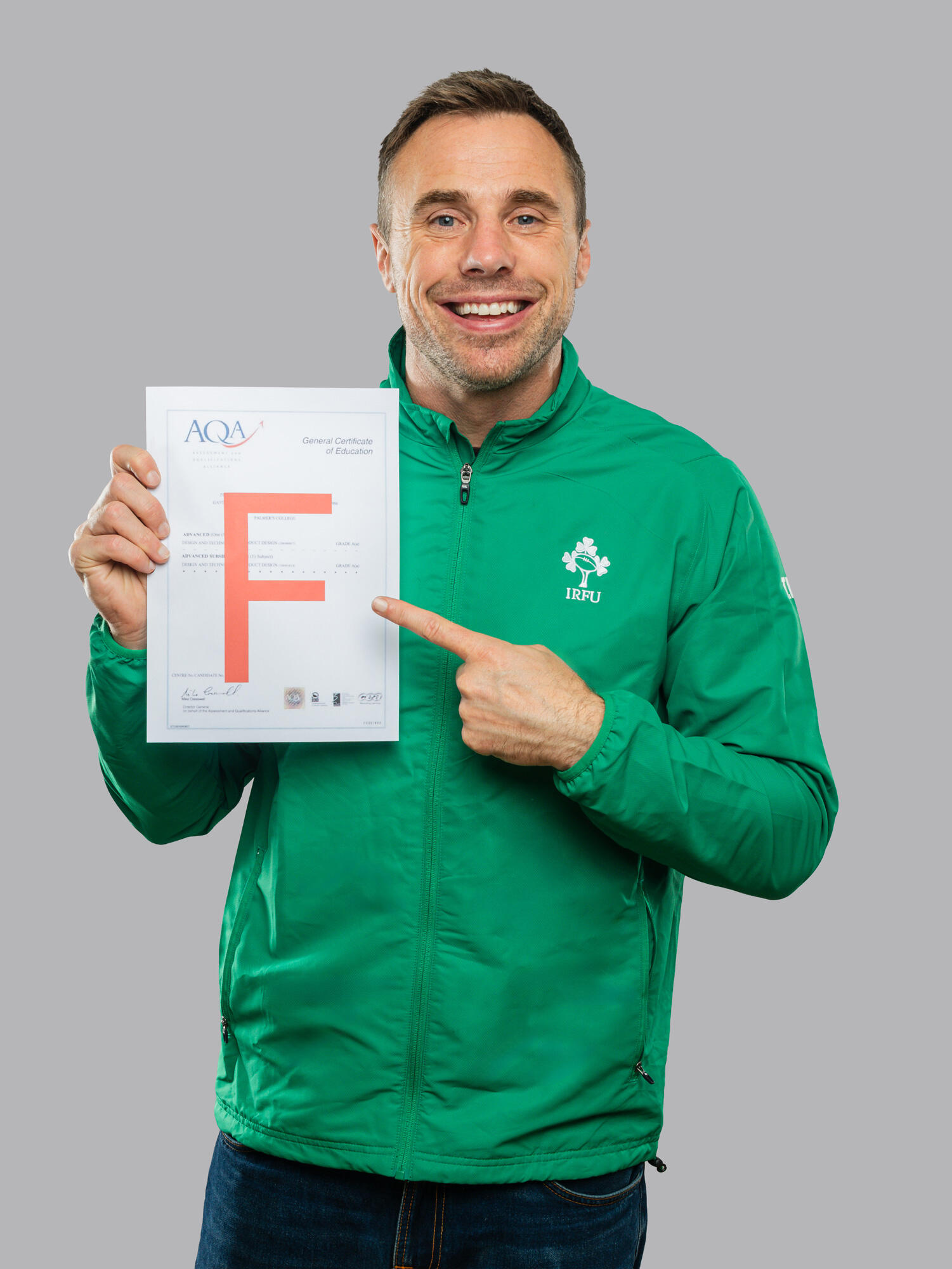
A-Level Certificate
I didn’t go the traditional route that you see all these young rugby superstars doing nowadays. I never played for Ireland school boys and barely made the Ulster schools team. I was therefore never asked to join an Ulster or Ireland Academy and it looked like there was no proper future in rugby for me. So my plan on leaving school was to do my exams and head off to university in Scotland or England and only play rugby socially. I thought the ship had basically sailed.When I then failed my A-levels (much to my mum's disgust) I didn’t get into any of the courses I wanted and didn’t know where I was going to go or what I was going to do. My school rugby coach then said he thought I might have a chance of going to study in Belfast. He then put me in touch with the Ulster Academy and asked them to give put me on the bench for a trial as a wildcard.Knowing this was my only opportunity I put everything into it, resulting in a follow-up trial. An invitation to the Ulster University Sports Institute followed.From planning on hanging up my boots, within two years I had my first international cap in Lansdowne Road against the USA. Crazy how when one door closes another one opens.
"My only opportunity"
- Tommy Bowe, 2026
04
ROSIE TENNYSON
PARA TRIATHLON
THE OBJECT
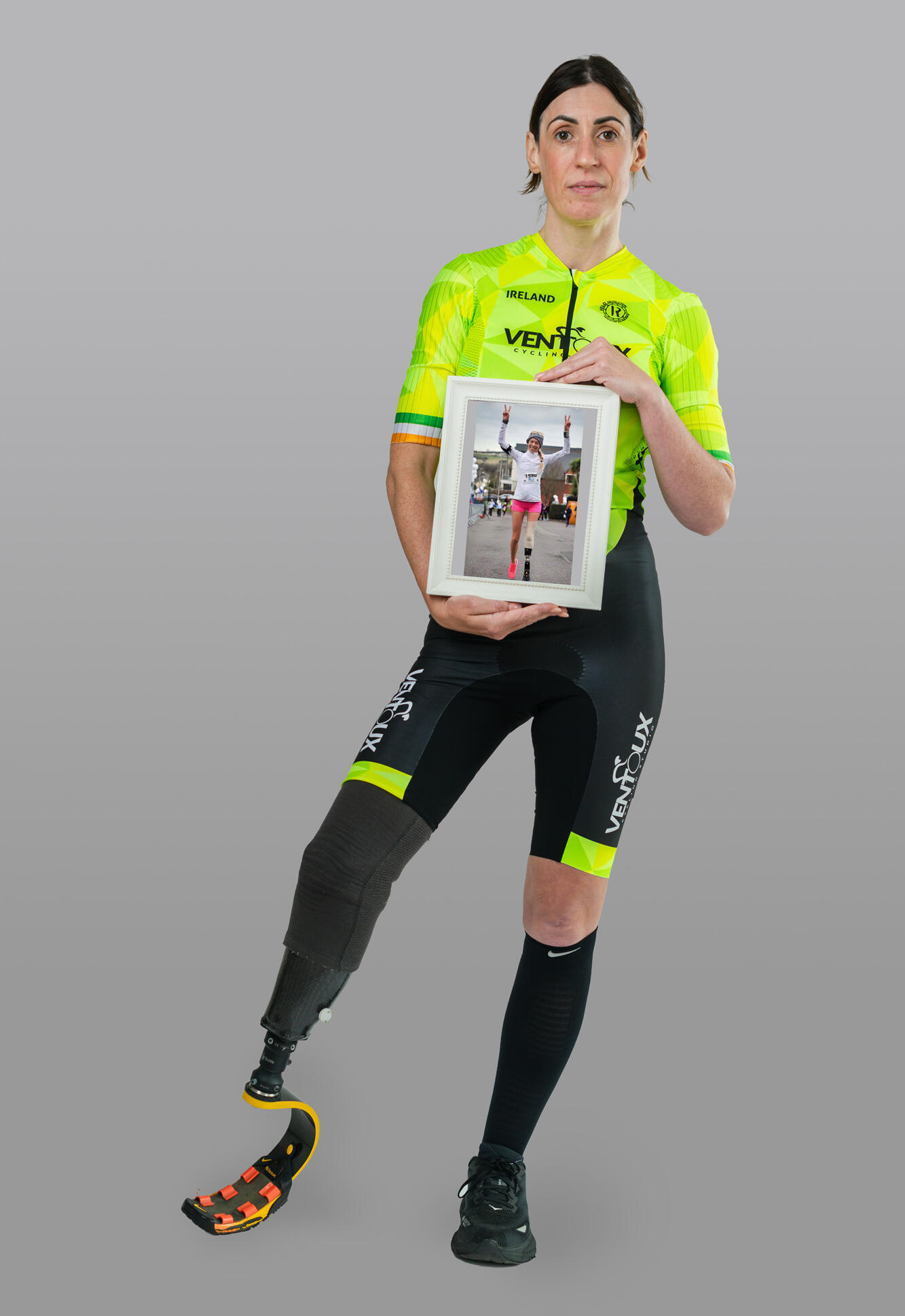
A Photograph
Everything inside me just lit up. It was her face, her eyes. I saw how happy she was, and I was so drawn to her. I couldn’t get close enough to that photo – I put it on my lock screen.Until that moment, I hadn’t really believed that becoming an athlete was possible for me. I was waiting for my own leg, spending three years in a wheelchair, and wondering, “Is this going to be my life?” It wasn’t a great place to be. I had been sitting in my wheelchair, in the bathroom, brushing my teeth, when my friend sent me that photograph of Adrianne Haslet. I remember it so clearly. I was having one of those days when I felt, “Oh my God, everything’s hopeless.” I saw her running blade, but it was her face that stopped me. Her whole face had lit up. Her eyes were smiling. She looked so happy.Here was this woman who had fought her own battles, and there she was, on the other side, running with her blade. With joy. Looking at Adrianne, something changed. My whole mood lifted. I thought, “Yes, that’s what I’m going to aspire to be.” I realised there was hope after the amputation. This wasn’t the end. I had a vision of myself and a dream to run. When I later crossed the finishing line of the Crooked Lake Triathlon, I cried. It felt amazing: I had found my place. It completed me.
"This wasn't the end."
- Rosie Tennyson, 2026
05
JIMMY KIRKWOOD
HOCKEY
THE OBJECT
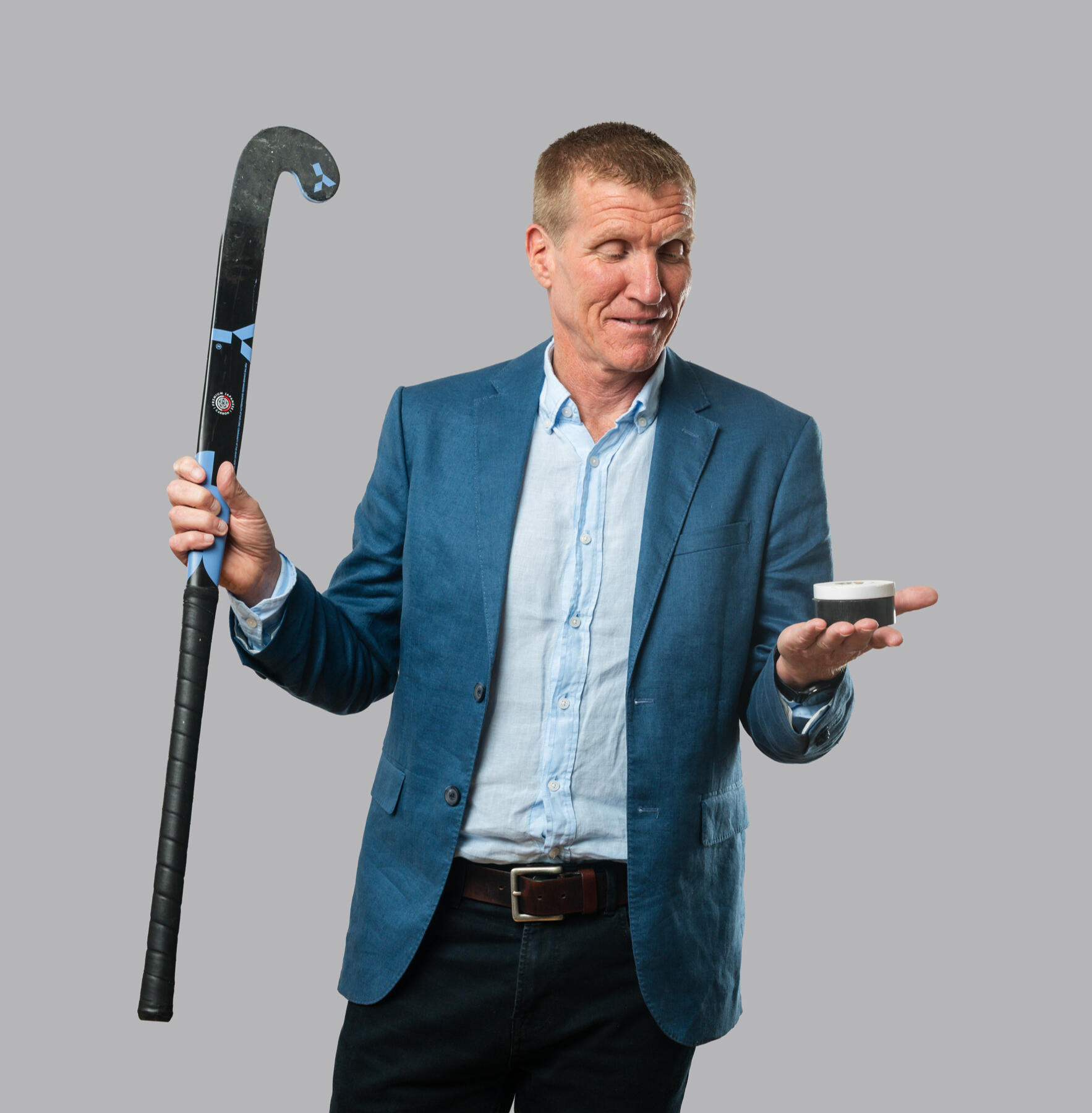
A Roll of Electrical Tape
I loved sport. As a young man I played for the joy - the winning was a happy by-product. That flow, when I’m playing well and everything just clicks into place, can be mercurial…sometimes it happens and sometimes it’s just not there.As I got older, I started realising that sport needed a bit more steel, more discipline. It meant that if it wasn’t ‘my day’ I had to have a plan and the mental resilience to adapt my day and play better. The fear of not playing well increasingly started to become a bigger obstacle and something I had to find a way to overcome.Preparing for matches, especially big matches or tournaments, became key. For me, this included preparing my sticks for the game ahead: systematically taking off the old grip and replacing it. Finding the join of the new tape, peeling it back while breathing in the resin of the new grip. Wrapping it round and round the stick. Making sure it was smooth, not too thick, not too thin. No kinks.In those days you never got two hockey sticks the same and this process helped personalise them. It was a way of making them feel more a part of me. Taping the stick stopped the handle getting slippery, but the process is what enabled me to calm my mind and really focus.Without realising it, preparing my stick became part of my mental preparation. When I sat the stick down afterwards, it felt ready for action. Then I just had to focus on myself!
"It felt ready for action."
- Jimmy Kirkwood, 2026
06
LADY MARY PETERS
TRACK & FIELD
THE OBJECT
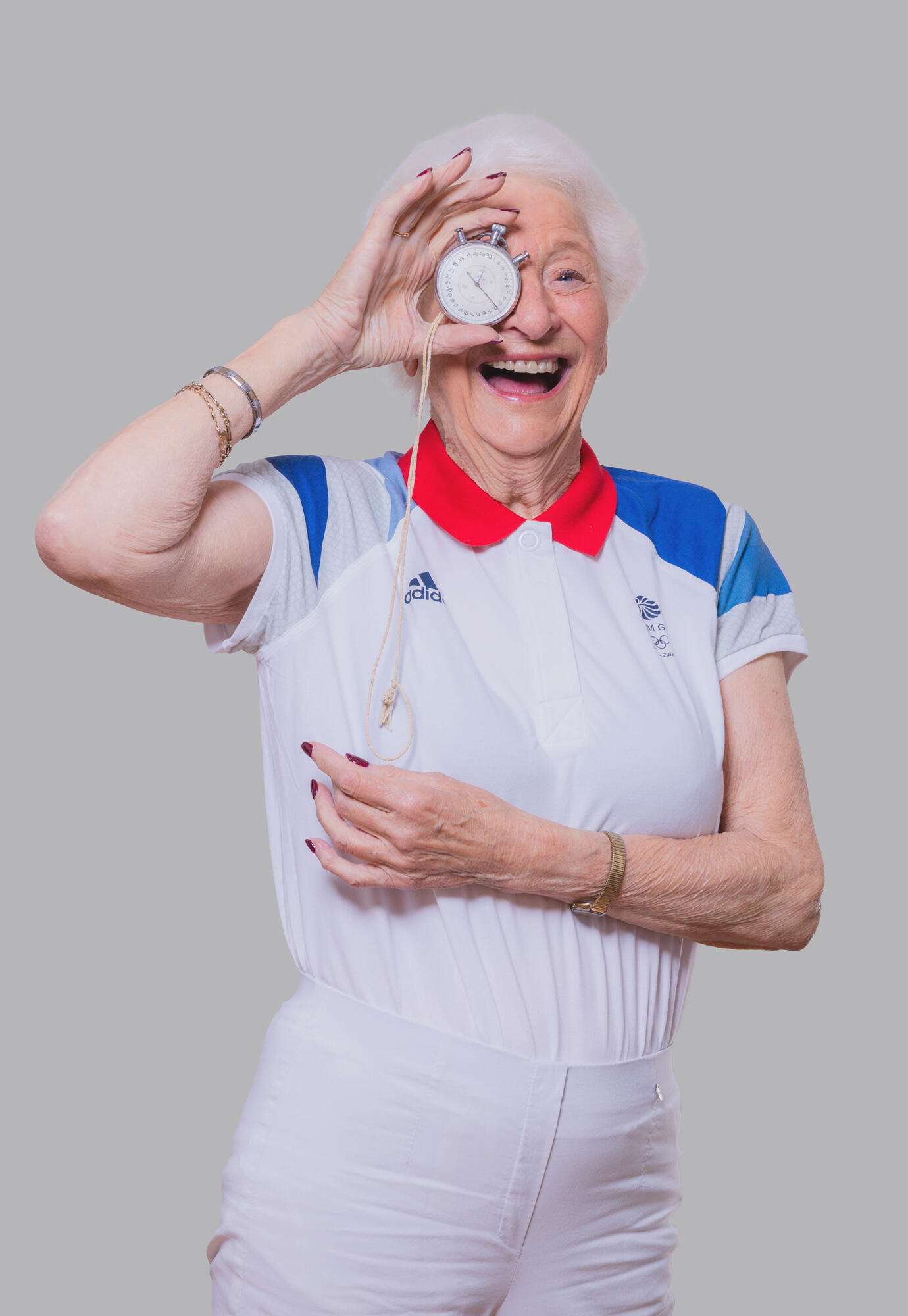
A Stopwatch
My coach, Buster McShane was an extraordinary coach who always challenged me to be my best. He had a way of telling me just what I needed to hear and when.At the Munich Olympics in 1972, the medal table came down to the final run. Buster didn’t confuse me with figures and decimal points. It simply had to be the fastest I had ever run. I went on to win gold and Buster bought a stopwatch for me from a Russian coach as a gift.Following the Games I was taking a break from athletics to enjoy the celebrations and consider my future. The “troubles” were at their most difficult and it wasn’t an easy time, but I was focussed on raising funds to reconstruct the running track at Queens University Belfast.Six months later Buster was killed in a car accident. I was devastated. My world stopped.My training partner was Mike Bull, a pole vaulter and decathlete also coached by Buster. I had not previously intended going to the Commonwealth Games in Christchurch New Zealand, and wasn’t very fit - but Mike and I decided to go as a tribute to Buster – and both went on to win gold. I need more for this paragraph – how did they train? How did his coaching provide that support? How did the stopwatch feature?The stopwatch meant that my inspirational coach was always with me. He was the man who made an average athlete into an Olympic Champion and holder of a World Record. The impact of the right person at the right time never leaves.
"My world stopped."
- Mary Peters, 1973
07
NIGEL CARR
RUGBY UNION
THE OBJECT
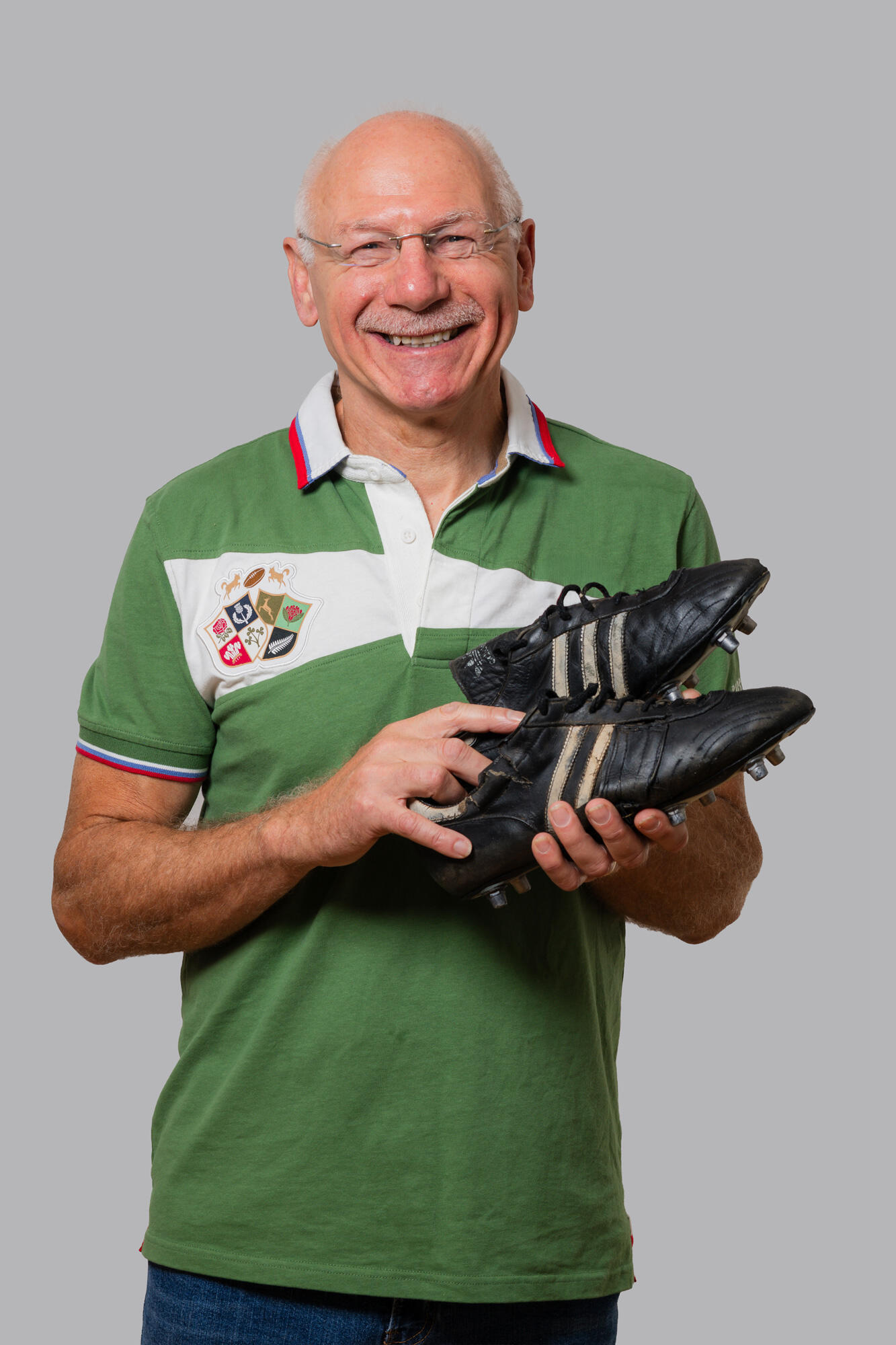
A Pair of Football Boots
As a keen competitor in both football and rugby, these boots would have been unremarkable when compared to teammates in the NI Boys Brigade or Larne FC sides. Likewise, if likened to the boots of my Ulster or Irish rugby squad colleagues. They served me well as the list of representative sides grew to include lining out with British Universities and the Barbarians.However, a full international rugby cap for Ireland proved elusive, with a serious injury to knee ligaments, cartilage and articular cartilage bringing my “career” to an abrupt halt. I was out of the game for over a year before tentatively slipping the old boots back on in the hope of a comeback. It didn’t go well – at least at first. Concussed in my second game back, I needed a third knee operation after the third game. There was a very real chance that I’d never qualify for that Irish international cap for my knee, almost like my boots, didn’t look to be up to the challenge. But that wasn’t the end. As the surgeon did his work in the hospital, I had my local cobbler repair the boots with leather sewn over the original skin. Just three weeks later I played two club games in the space of four days – scoring in both. By the time a further three weeks had passed I played my part in Ulster’s historic victory over a great Australian national team. By Christmas Ulster had won their first interprovincial title for 8 years (and would continue to win ten consecutive interpro championships). I was also selected for my first international cap in a campaign that would be rewarded with only the 6th Triple Crown success since the Championship started in 1883.I guess these old boots might have looked like they’d had their day. That they were beyond their best and ready for the bin. At my darkest times there was the fear that my rugby playing days were, like the boots, behind me without reaching my full potential.Those boots are a reminder that significant difficulties may be overcome. They are a symbol of the fight that allowed me to persist with later injury and play a final game for Ulster.
"Beyond their best"
- Nigel Carr, 2026
08
REBECCA SHORTEN
ROWING
THE OBJECT
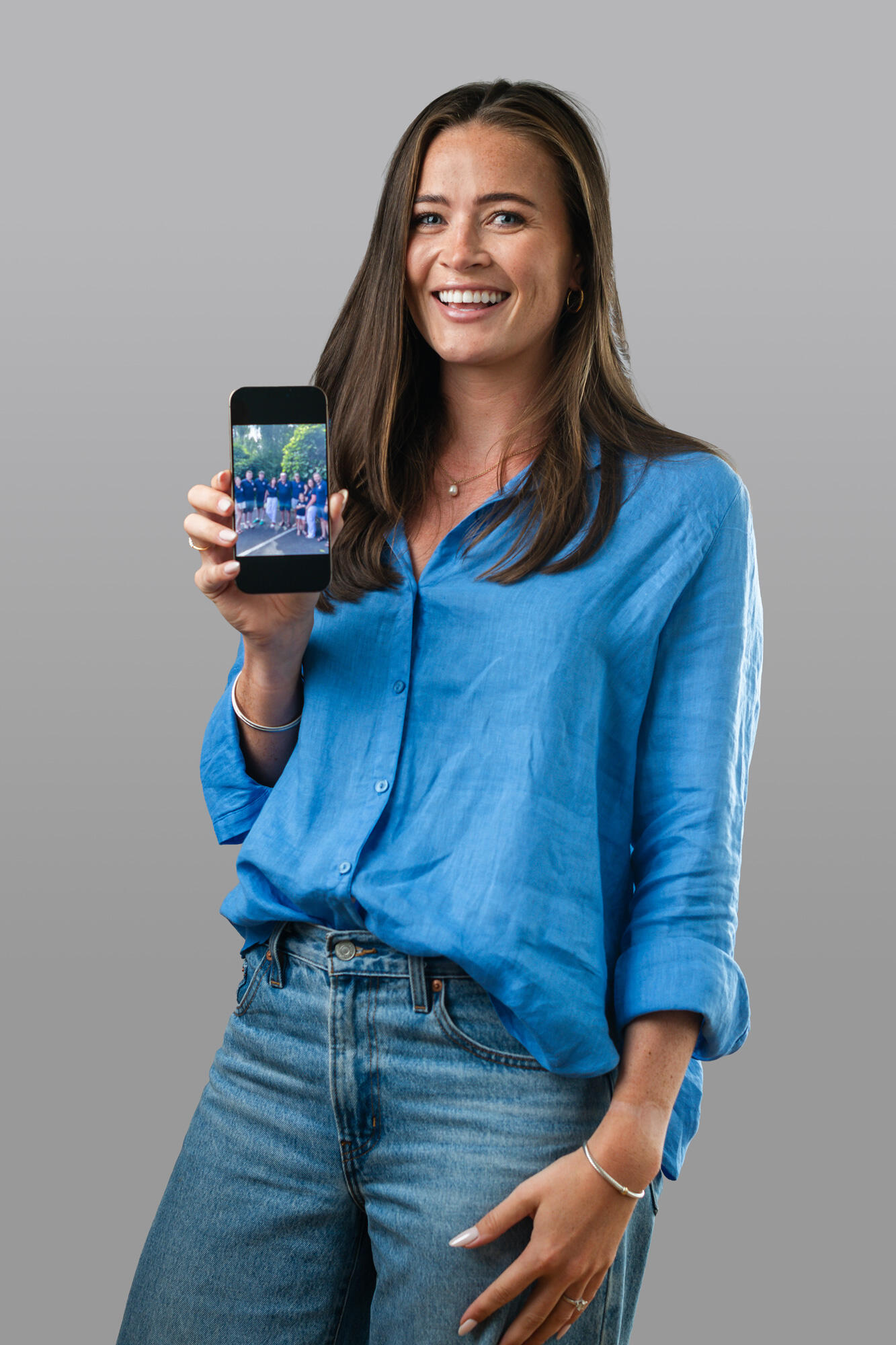
My Phone
I just remember when we were going up to the pontoon for the medals, all I wanted to see was my family. I looked up and down and there's just people everywhere shouting. I was constantly thinking ‘where's my family? Where's my family?’ And then I saw them and I was like, okay, finally, now I can enjoy this experience.I’m not one of those people who has a ‘lucky pair of socks’. A lot of things can change, and I don’t want to be reliant on one thing. I had a lot of injuries and physical pain in the run up to the Paris Olympics. It seemed never-ending. The Olympic coaches were constantly telling us that the line up could change right up to the race. I just tried my best to recover, tried my best to train well, tried my best to do what I could to get to the starting line. I took things day by day.Living away from home, my phone is my connection to my family. They are my biggest source of support. I learn so much from people - my friends, my family - I find them all so inspiring. When things are tough or stressful, I’ll FaceTime them. They give me a break from talking about rowing and pick me back up. It reminds me who I’m doing it for.In rowing the weather can change, in more ways than one. Things can be so uncertain. They provide me with an anchor.
"The weather can change, in more ways than one"
- Rebecca Shorten , 2026
09
MIKE BULL
TRACK & FIELD
THE OBJECT
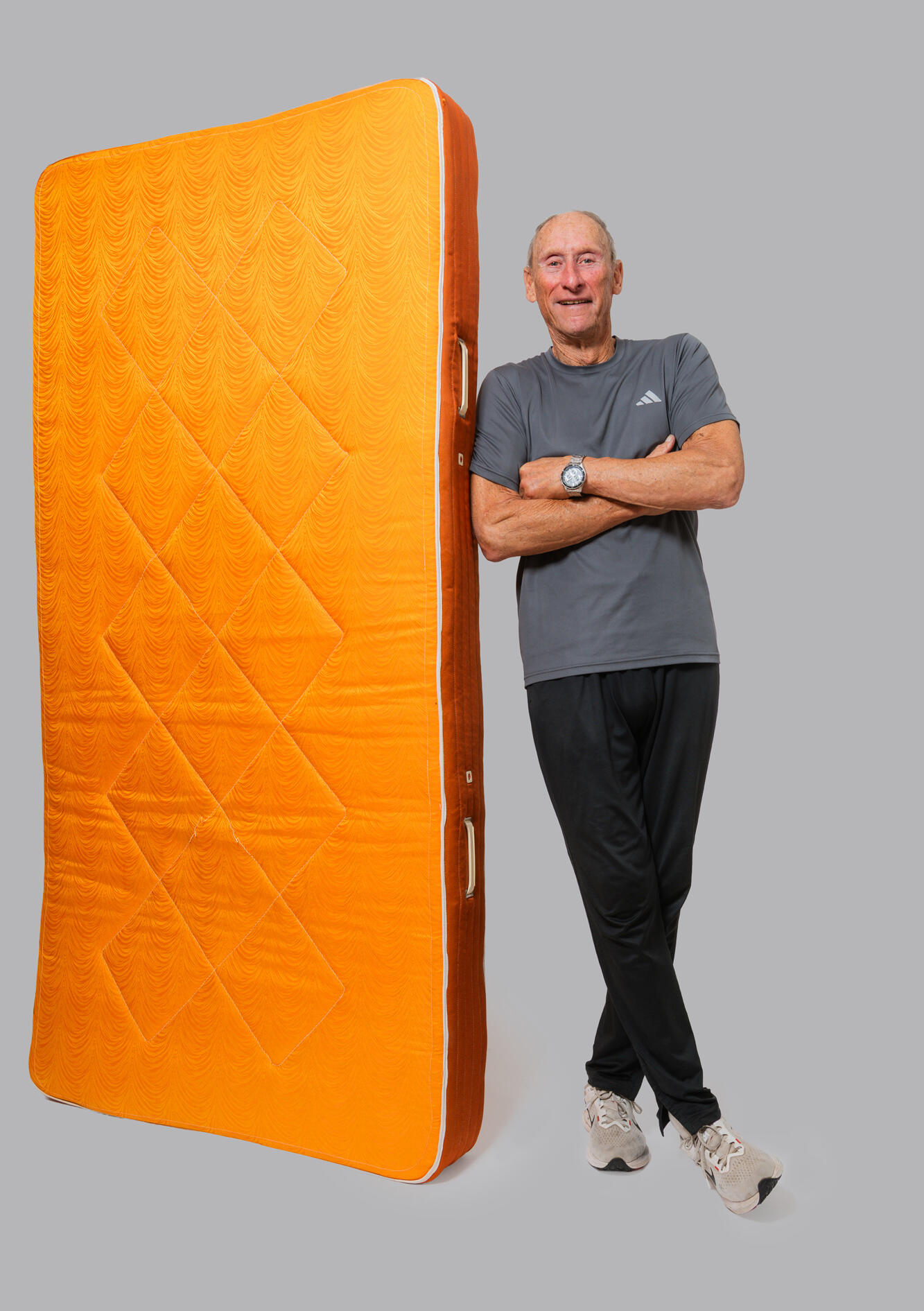
A Mattress
I was a student at Queen’s University, Belfast in 1968, training for the Mexico Olympics, and there was absolutely nowhere in Northern Ireland I could pole vault.
I met Tom McAuley who said to me “Surely, we can find somewhere. Leave it with me”. Tom was an ex-Queens’ student and former NI pole vaulter. Two days later he’d persuaded the owner of Harland and Wolff shipyard to give me this empty shed, which was fantastic!
We started building a slipway and my Dad, him and I nailed it all together. This guy from the shipyard was watching and said “Well, what you gonna land on? Would you be interested in some mattresses?”
Cue the arrival of dozens and dozens of mattresses from ships being refitted and which were otherwise going to be dumped. They formed the basis of the landing area. I then collected hessian potato sacks and filled them with foam rubber scraps to layer on top of the mattresses and cushion my fall.
The shipyard workers would come to watch me practice during their lunchbreak. They would spot my feet, and someone was delegated to catch the pole, so it didn’t hit the concrete and break. It became a joint effort, and I still run into some of the lads today who say “I remember you down there”.
Because I was able to practise every day, I went from being in the top 100 to finishing 11th in the ’68 Olympic final. Being an athlete when there were no facilities meant I had to adapt to the situation, overcome obstacles, and I could face pretty much anything that was thrown at me. Resilience makes you hard to beat!
"What you gonna land on?"
- Harland & Wolff worker, 1968